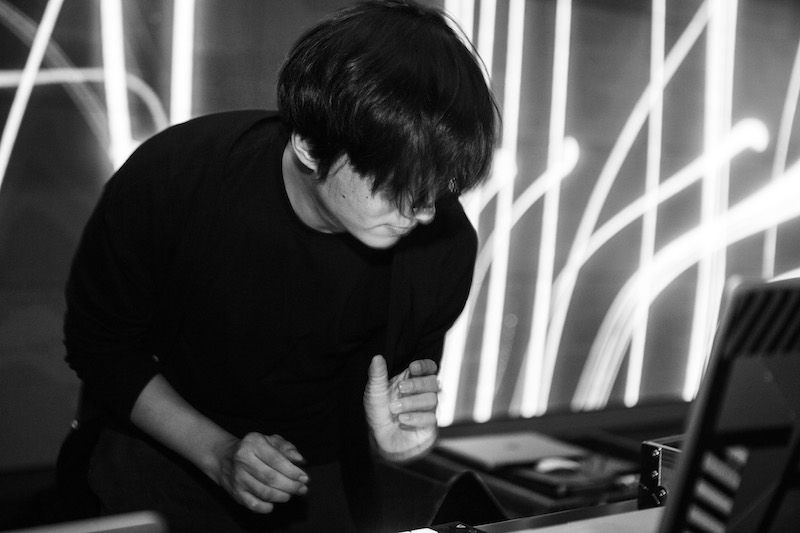
Far Infinity Explains "We Are All a Part of a Circuit Board" and Talks Dystopic Beats Ahead of Nov 24-26 T.A.U.M. Fest
Far Infinity's name is apt, both when you consider his eerie, intricate, dystopic beats, and when you hear the upstart Beijing DJ describe the flaws in the local scene and his worries about the pitfalls of modern living. Below, the burgeoning beatmaker tells us about all that and more ahead of the three-day T.A.U.M. Festival (Nov 24-26) – taking place at Lantern, Dada, and Floso, respectively – that he and his cohorts at the rising Prajnasonic label are coordinating and performing at.
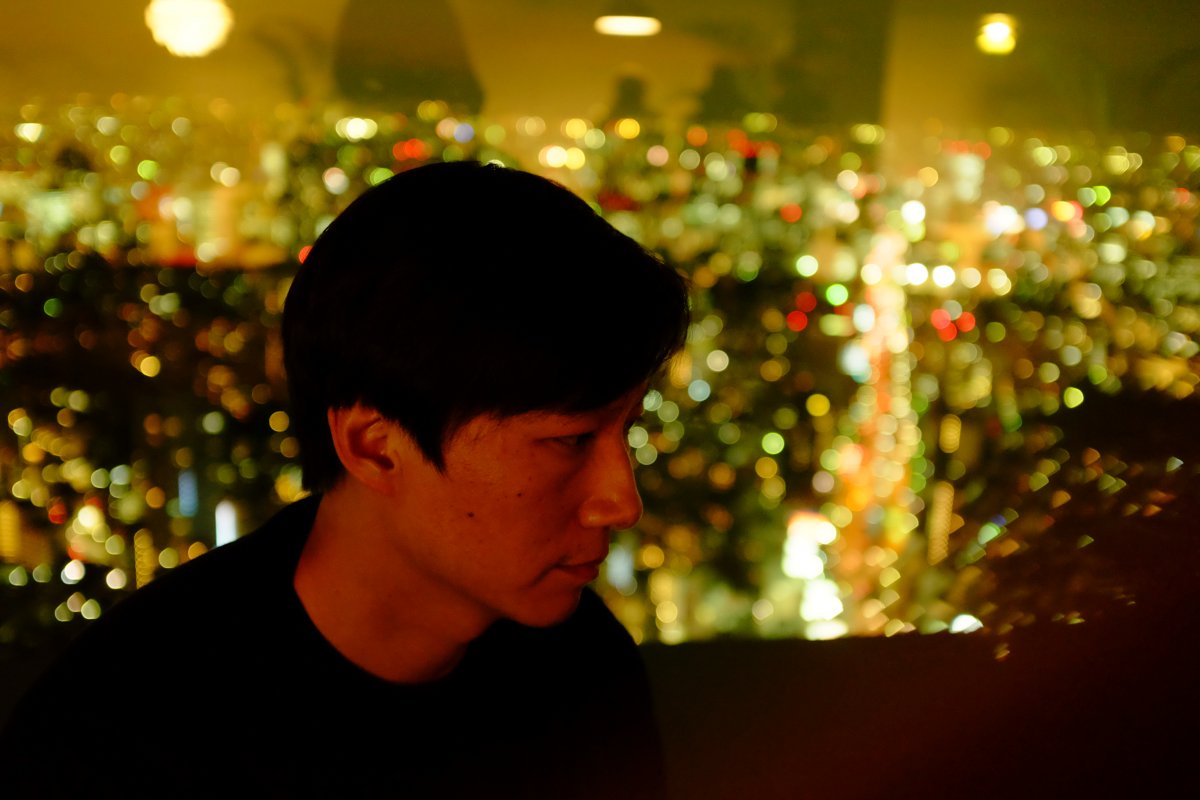
How did you get into DJing in the first place?
Actually, I got into DJing very late, just in recent years. My entry into the electronic music scene was through sound installations and interactive media designs that I had begun working on many years before. I was based in Berlin from 2009-2011, and from there I was influenced by the underground techno and experimental music scene. When I moved back to Beijing I started some audio-visual projects in some galleries and exhibition spaces. From these projects, I started producing my own music.
In early 2016, my friends and collaborators started a music label called Prajnasonic. At that moment we really needed to promote our music. Beijing has been the rock music capital since the '90s. But in 2016, there were still very few record labels focused on releasing real electronic music, at least compared to some western cities, especially in terms of techno and atmosphere works.
For me, electronic music is not only for parties and dance clubs. It also has some philosophical meaning. For example, algorithms, textures, and spaces within the music are sound architecture, the root of the art for me. In terms of my DJ set, I always keep ideas to play with remix tools, such as drum sequencers and sampler machines. I'm always trying to make things happen and keep it fresh in my mind.
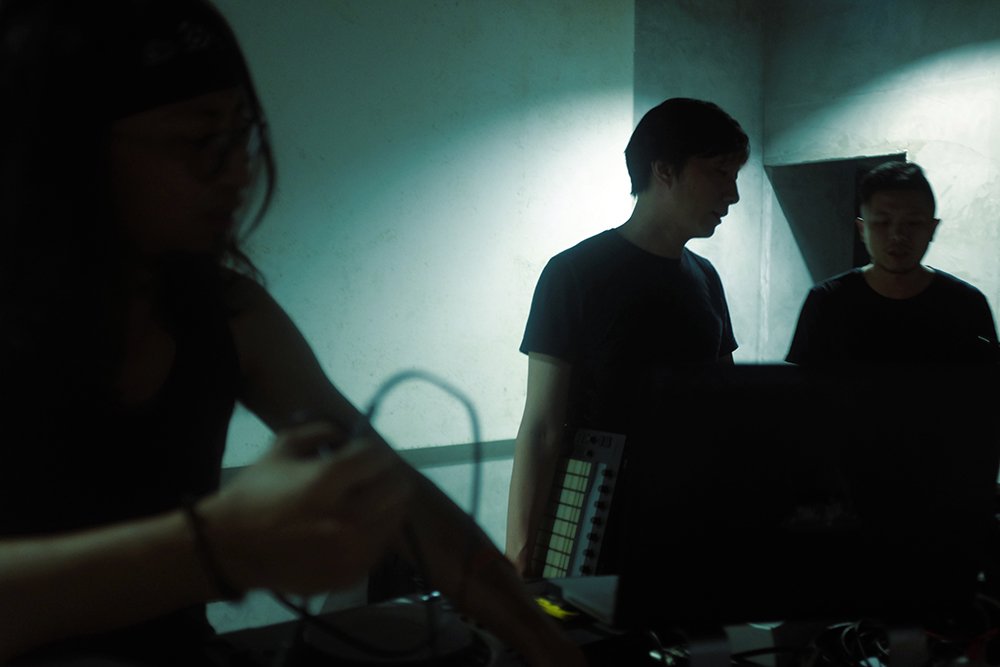
Tell us about using multimedia in your sets – how do you work to make the visuals complement the music?
I’m very careful to use multimedia or visuals in my sets if the gig is under my control. I want to keep things simple and let people focus on the music. But from another point of view, visuals always give you a guide to the concept or storyboard. Music is a kind of meditation, and in that moment it refuses to be analyzed. Sometimes I feel more comfortable with just a darker light or fog machine. But this is only for club environments – my audio-visual installation projects are absolutely different.
My favorite Far Infinity track is "Artificial Intelligence." How do you feel about the development of artificial intelligence, and how did that inspire the title and tone of this song?
At the end of that track, I sample some dialogue from Stanley Kubrick’s 2001: A Space Odyssey. In that scene, supercomputer HAL9000 has its own willpower and desires. That film, along with Blade Runner, have made me dwell on artificial intelligence quite a bit. I’m not against technology, but I'm just worried about how people blindly use it. I love Neil Postman’s book Amusing Ourselves to Death. It details how “people will come to love their oppression, to adore the technologies that undo their capacities to think.” This isn't just about technology but also global corporations and the political will behind them. That is the situation we live in. We are all a part of a circuit board, nothing is natural. Especially in China today – you could not live without a smartphone, and all social life is in there. Riding the metro, you could find all the people immersed in the world of mobile phones. For me, that is not just a technology but also a kind of control and economic strategy.
Speaking of 2001 and Blade Runner, your music on Interzone and Double Illusions is so atmospheric and powerful, I feel it would work really well as the soundtrack in a movie or TV show. Have you ever dreamed of working with a director to score her or his movie?
I’m a composer and sound designer for some short films and contemporary dance projects. That's a very different scene from performing music in clubs. Normally, I would prepare a lot of demos and sound presets and store them in my library when some project comes in, then I will make a quick search and develop and rearrange them together with directors.
My favorite contemporary classical composers are Michal Nyman and his work on the film Man on Wire, and Philip Glass’s Koyaanisqatsi. One of my favorite directors is Fritz Lang, because of his film Metropolis in 1927. He was absolutely a prophet of the future.
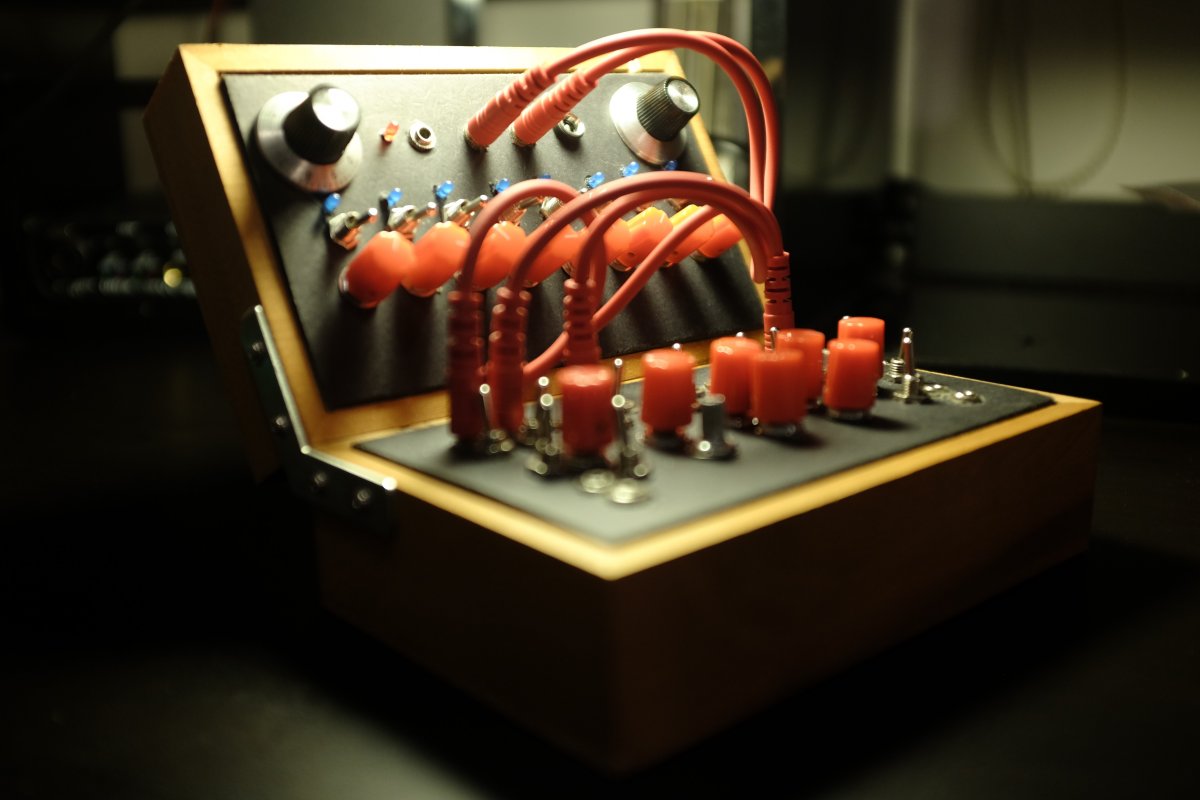
I’m also a geek in everyday life. In my home studio, I spend a lot of time to developing and DIYing my synthesizers and other sound gears. Music is the best friend in my life.
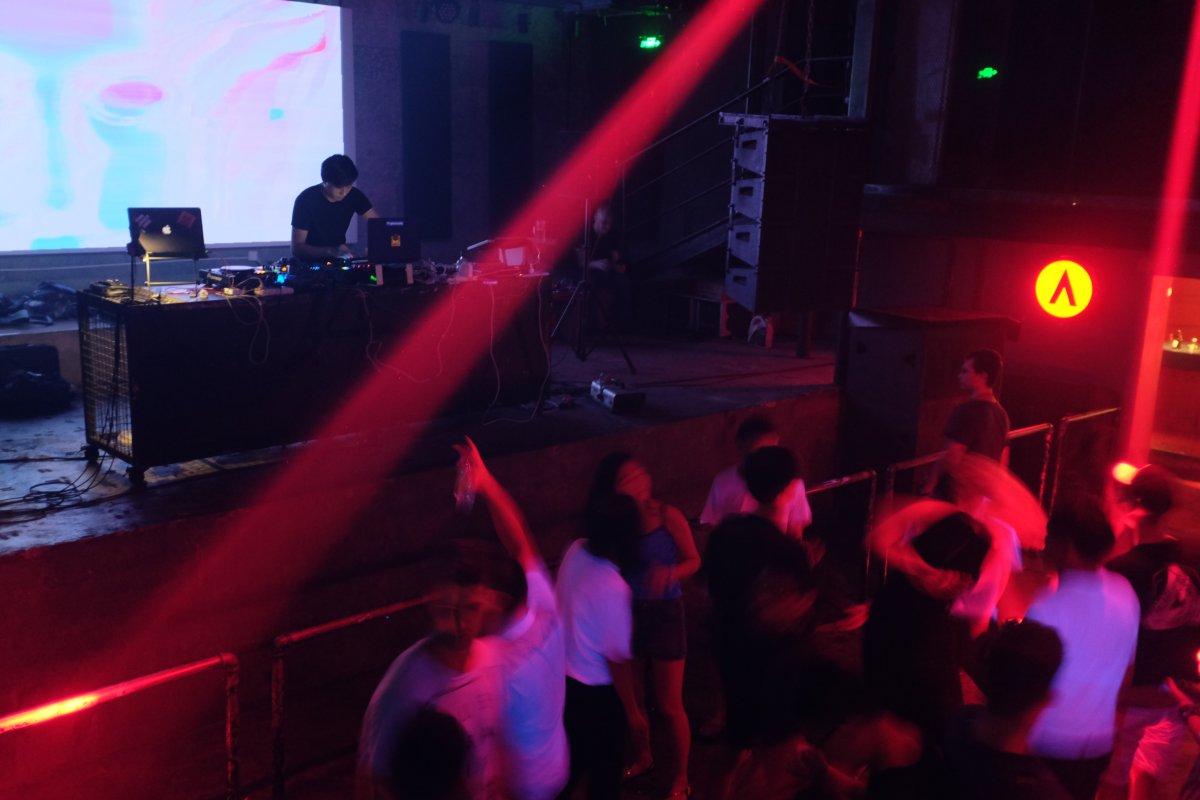
What do you think about the state of Beijing's DJ and club scene these days?
Electronic music was growing in the late '90s in Beijing. When it comes to the first generation of Chinese DJs and producers, most have a rock music background. We listened to a lot of punk electronic bands at that time, such as Prodigy, Atari Teenage Riot, early Chemical Brothers, and some drum and bass tracks. Beijing’s first underground “rave” club was called 88, and it changed to 99 later. That year, around 2000-2001, The Great Wall party was the biggest event. It made you feel like you were part of a movement, and it was really exciting.
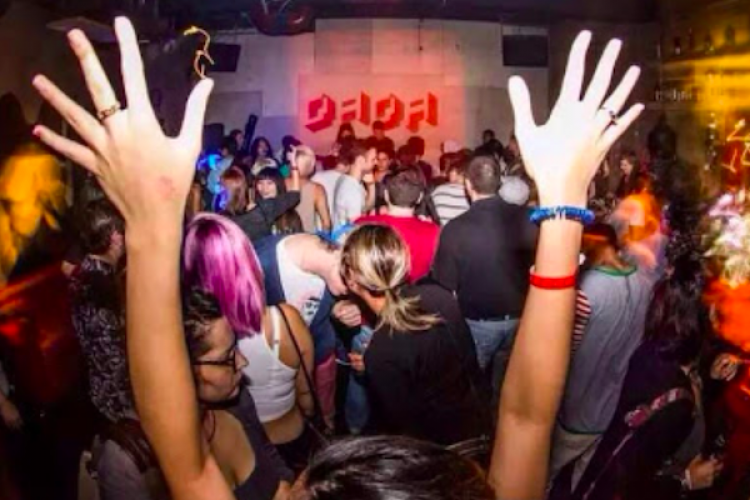
After 17 years, the game has changed a lot. It looks like a damaged computer, always powered off and restarting again and again. In recent years, it’s getting better, but there is still too much interference by the authorities, along with venue and budget limits. But that means we still have space to work on. In 2017, there are still two or three big electronic clubs active in Beijing, like Dada, Lantern, and maybe the newest club, Zhao Dai. Big events are very difficult to get approved by the government. But music always gives us energy, we never give up. Thanks to many independent labels, promoters, and producers, DJing is growing very fast in recent years. We are always looking forward and trying to work toward our best.
Anything else you'd like to add?
We are planning three days of techno events, the T.A.U.M Music Festival, from Nov 24-26. It will be held in Lantern, Dada, and Floso Beijing. We have invited some of the best techno DJs and producers working today from Beijing, Shanghai, and Chengdu such as HWA, Miia, Max Shen, Su, Hu Yang, Meng Han, and Liia. The budgets are limited and we have no sponsor this time, so of course we lost some good artists from the list, but we have big wishes to make it happen and continue it as a yearly project in the future. T.A.U.M stands for "Techno, Advance, United, and Massive" – these are our goals for the event.
Also, we will have a new EP’s digital release in November, from our artists Fencha and iimmune (aka.Wavwave). And my Far Infinity Interzone full-length album will come out soon.
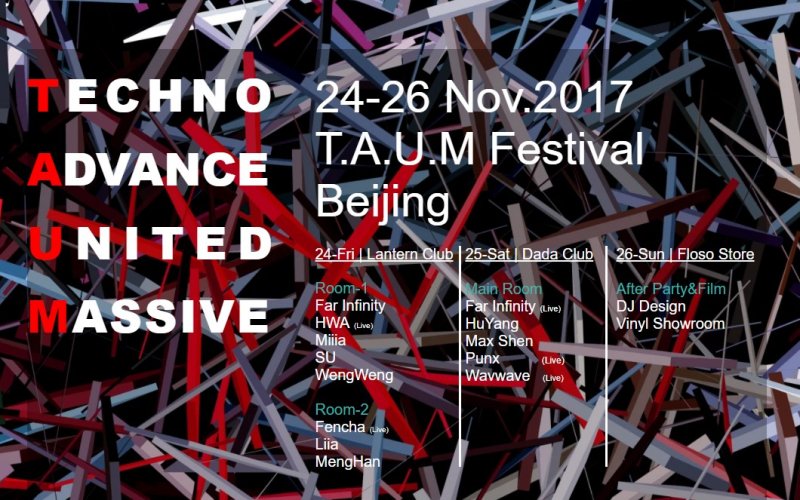
This weekend's T.A.U.M. Festival is made up of three parts:
- Nov 24 at Lantern: Far Infinity, HWA (Live), Miiia, SU, Weng Weng (Room 1); Fencha (Live), Liia, Meng Han (Room 2)
- Nov 25 at Dada: Far Infinity, Punx, Wavwave, HuYang, Max Shen
- Nov 26 at Floso: 'I Dream of Wires' Screening and DJ Design Set
More stories by this author here.
Email: kylemullin@thebeijinger.com
Twitter: @MulKyle
Photos: Far Infinity