Beijing News: Insect Museum & Updated Dog Ownership Regulations
Beijing is a happening city! Don't miss a thing with our weekend roundup of the latest news.
New Insect Museum Opens in Fengtai

Continuing the city’s recent science popularization efforts, Beijing has just gotten its largest insect museum.
The Peking Insect Museum (北京市自然昆虫博物馆), which opened on Apr 9 in Fengtai District, features a collection of more than 10,000 insect specimens, along with more than 100 live insects and reptiles.
The moderately sized 4,000sqm building space houses educational exhibition spaces, interactive experience spaces and extended service facilities, all capable of meeting the various needs of daily visits by the general public, research, parent-child activities and more.
Exhibition highlights include the impressive “butterfly wall,” a floor-to-ceiling array of lighted specimens of hundreds of brilliantly colored butterflies, and the jewelry room, in which insect specimens are displayed alongside insect-inspired antique jewelry.
The museum has an aesthetic focus as well, with light wood floors, display cases and ceiling elements complementing the abundance of white materials, clean lines, open spaces and large windows letting in an abundance of natural light. The organization of the exhibition spaces also guides visitors to explore the question of the interaction between humans and the natural world.
The Peking Insect Museum is open Tue-Sun from 10am to 7pm. A single adult ticket is RMB 129, and a child’s ticket for a child 1m (non-inclusive) to 1.2m (inclusive) tall is RMB 64.5. Children 1m tall and shorter can enter for free.
More information can be found on the museum’s official WeChat account “北京市自然昆虫博物馆”.
Peking Insect Museum 北京市自然昆虫博物馆
3/F, Bldg 3, South Axis International Cultural and Technological Park, 15 Nanyuan Lu, Fengtai District
丰台区南苑路15号南中轴国际文化科技园3号楼3层
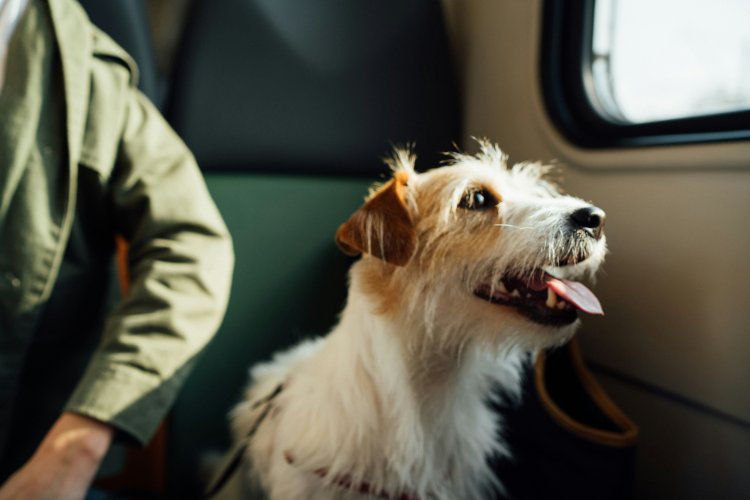
Updated Dog Management Regulations Draft Presented for Public Review

On Apr 8, the Beijing Public Security Bureau released the “Beijing Municipal Dog Management Regulations (Revised Draft)"《北京市养犬管理规定(修正草案)》and has opened the document up for public comment until May 7. The move is intended to update the city’s regulations on dog ownership and management, taking into account the health and safety of residents, public order and the city’s appearance.
The proposed updated regulations amend eight of the current 35 regulations, remove two of the current regulations, and add three new ones. Updates to the regulations include clarifications on the municipal organization structure for dog management in Beijing, as well as on dog registration requirements, dog owner responsibilities, appropriate spaces for dogs, elderly and disability exceptions, dog confiscation, penalties for improper registration or keeping of dogs, and consequences for harm caused by dogs.
Full details can be found by consulting the text of the proposed updated regulations, however some notable changes in the regulations include the following:
Immunization, Registration & Other Obligations for Dog Owners
Dogs three months of age or older should be brought by the dog owner to a legally recognized rabies immunization center, wherein a health check is conducted on the dog, the dog is vaccinated against rabies, electronic identification is implanted, and a dog immunization certificate is obtained. Immunization sites should accurately record information on dog owners, dogs and immunization.
Dog registration may be carried out after immunization procedures are completed.
Dog owners shall apply for dog registration with local public security officials within 30 days from the date of implantation of electronic identification or verification of electronic identification information, based on the immunization certificate.
The dog registration certificate requires an annual inspection from the date of registration.
Dog owners shall apply for an annual inspection to public security officials within 60 days before the expiration of the deadline, with their dog registration certificate and dog immunization certificate.
Those whose dogs are registered and undergo annual inspections in accordance with the law will be exempt from rabies vaccination fees.
Dogs taken to participate in outdoor activities shall not harm public interests and the legitimate rights and interests of others.
The number of effective measures required to be taken by dog owners to prevent dogs from leaving their homes on their own is increased.
Dog leashes are limited to a length of 1.5 meters, and dogs should not take over public areas. Behavior training for dogs is encouraged, as is the development of an appropriate understanding of good dog ownership among the citizenry.
Dog-Appropriate Spaces & Exceptions to the Regulations
Dogs are prohibited from entering the following places:
- Party and government office spaces, public institutions, etc.
- Education and medical facilities such as schools, kindergartens, childcare institutions and hospitals
- Public cultural, sports, and entertainment venues such as libraries, museums, memorial halls, art galleries, cultural centers, exhibition halls, theaters, sports venues, amusement parks, youth centers and workers' cultural centers
- Martyrs' cemeteries, revolutionary education bases, cemeteries and other such places
- Restaurants [with the exception of those that are explicitly dog-friendly], waiting rooms, subway stations and other such places
- Other places specified by laws and regulations.
(It is, of course, always recommended to double-check with locations beforehand to confirm whether or not dogs are allowed and, if so, in what capacity.)
If the dog owner or individual with the dog enters one of the aforementioned spaces in violation of regulations or does not obey related directions of venue management, the venue manager or operator shall report the incident to public security officials.
Dogs are prohibited from entering business premises such as markets, shopping malls, commercial districts, hotels, parks, public green spaces, and other places stipulated by laws and regulations, with the exception of places that provide services specifically for dogs or dedicated open areas.
Operators or managers of places allowing dogs are required to implement safety management measures. Dog owners should be proactive in presenting dog registration certificates, and they should put a muzzle cover on their dog or keep their dog in a dog bag or cage to ensure public safety before entering the aforementioned places or specialized areas.
Violators of the above regulations and those who fail to implement the appropriate safety management measures will be given a warning by public safety officials and may face a fine of up to RMB 2,000. Under serious circumstances, the person may be fined between RMB 2,000 and RMB 10,000.
The new regulations contain exclusions for guide dogs for the visually impaired and dogs tasked with other forms of disability assistance. Blind individuals and severely disabled people with guide dogs or disability assistance dogs are exempt from management service fees. Additionally, guide dogs and disability assistance dogs are not subject to regulation restrictions on prohibiting the keeping of dogs, bringing dogs to relevant places and taking public transportation, but owners should still comply with relevant national regulations.
Owner Responsibility for Harm & Registration Violation Penalties and Confiscation
If a dog harms others, the dog owner shall immediately send the injured person to a medical institution for treatment, advance the medical expenses, and bear civil liability in accordance with the law
If a dog is confiscated for violation of these regulations, public security officials shall handle the cancellation procedures in accordance with the law, and the owner will not be able to register for dog ownership for a period of five years.
Individuals who violate the regulations by keeping dogs in prohibited areas or falsely using, altering, or forging dog registration certificates shall have their dogs confiscated and may face a fine of RMB 10,000 on the responsible unit and a fine of RMB 5,000 yuan on the individual. Those who violate the regulations by raising strong or large dogs in key management areas shall be ordered to move the dogs out of the areas in question. Those who refuse to do so or whose dogs cause harm to others shall have their dogs confiscated by public security officials.
READ: Vendor Sneak Peek: 40+ Burger Brands from 15 Cities at Juicy Burger Fest 2026
Images: Unsplash