Beijing News: Traffic Police Increase & Brain–Computer Tech
Beijing is a happening city! Don't miss a thing with our weekend roundup of the latest news.
Traffic Police Presence Increased

The Beijing Public Security Traffic Management Department has launched a new road traffic management initiative in the new year, identifying several areas of focus, including ensuring safety, rectifying order, easing bottlenecks and reducing accidents.
As part of this initiative, traffic police will have an increased presence in some areas during weekday morning (7am-9am) and evening (5pm-7pm) rush hours.
Regions of specific attention include major streets in areas such as Xidan and Dongdan; major bridges and under-bridge intersections on the Second, Third, Fourth and Fifth ring roads; major streets such as Chang'an Jie and Ping'an Dajie; and hundreds of other congested and otherwise disorderly spots around the city.
Proactive steps towards improving order focus on seven aspects, including disorderly parking and placement of electric bicycles, the running of red lights and going against proper traffic flow, the illegal parking of motor vehicles, correct license plates and documents, and vehicle capacity, with traffic police taking a “zero-tolerance” policy towards violations.
Patrolling traffic police will also increase the frequency of inspection and control of accident-prone road locations and times of day.
The plan for traffic improvements is long-term, with the goal of seeing an increased traffic monitoring presence on all streets over the next few years.
Beijing Makes Advances in Brain-Computer Interface Technology

Chinese advancement in the science and tech spheres continues, with brain–computer interfacing included as an area of focus in the newest Five-Year Plan. Current development in this area aims not only to position Beijing, specifically, as a leader in brain–computer interface technological innovation but also to promote the brain–computer interface industry as a robust avenue for economic growth.
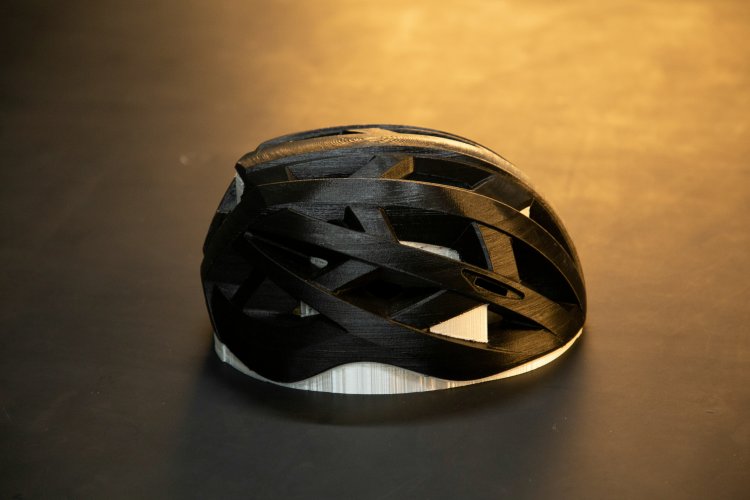
One Beijing company, Huamao Security, has created a special “safety helmet” fitted with sensors that read and record the wearer’s brain activity, enabling the data to be analyzed by the wearer or received by others in real time. The company imagines, for example, a scenario in which a “water tanker driver” begins to fall asleep on the road, and that information is transmitted to alert police to the potential safety issue.
Another project, “North Brain 1 (北脑一号)” has been developed by the Chinese Institute for Brain Research, Beijing. This “semi-invasive” technology uses electrodes placed under the skull and attached to the surface of the cerebral cortex, with little impact on brain tissue. After training, the technology can also allow patients to control an externally connected machine.
In 2025, North Brain 1 was used to complete the first batch of semi-invasive brain–computer interface human implantation in the world. After rehabilitation training, patients with paralysis were able to use their brains to control a mechanical arm to pour water for themselves. Other patients with ALS were able to use their brains to control a machine to facilitate speech. One patient who suffered a cerebral infarction was also apparently able to regain some limb function.
Brain–computer interface technology is currently divided into three main categories: non-invasive, semi-invasive and fully invasive. Currently, fully invasive brain–computer interfacing involves the insertion of flexible electrodes into brain tissue. At their thinnest part, these electrodes are less than two microns in diameter, or about 1/50th the diameter of a human hair. Such direct interfacing could enable response times three to five times faster than current human abilities.
READ: Seven Outdoor Skating Rinks to Embrace Winter
Images: Unsplash