The Xibei "Pre-Made" Dishes Controversy Explained
If you've been on Chinese social media recently, you might have noticed that nationwide restaurant chain Xibei, which has over 60 locations in Beijing, has been coming under fire from netizens for having dishes that are "pre-made." Yesterday (Sep 15), Xibei issued an apology letter addressing the controversy; however, the letter itself has also proven to be controversial, so let's take a look at just what's going on.
What Sparked the Controversy?
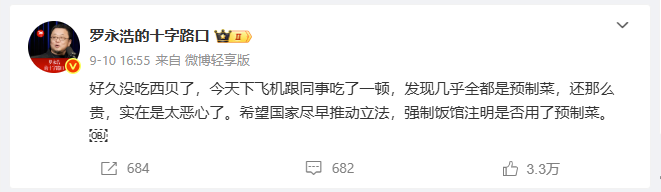
On Sep 10, entrepreneur and internet personality Luo Yonghao posted a critique on Weibo saying the food at a Beijing branch of Xibei tasted like it was not freshly made, rather it was pre-made at a central kitchen and re-heated on site. He also called for clearer regulation or labeling so that restaurants must disclose when "pre-made" components are used.
Xibei's Initial Response
Xibei's founder, Jia Guolong, acknowledged using central kitchens and pre-prepared components, a common industry practice, but contended that these do not meet the official regulatory definition of "pre-made dishes."
Xibei then published operation manuals for 13 dishes involved in Luo’s criticism. They also opened up kitchen operations (or offered inspections) to try to show how these dishes are made.
However, media investigations found some evidence that certain cooked dishes are stored overnight and reused across service periods. Investigations also uncovered evidence that frozen ingredients are widely used in Xibei's kitchen.
Many customers were upset to learn that many dishes they thought were freshly made in the restaurant actually use many pre-made elements from Xibei's central kitchen facilities. Part of the anger is also due to the fact that, compared to other similar restaurants, Xibei has higher prices, and netizens pointed towards a lack of transparency around the regulations.
Xibei's Sep 15 Apology
In response to the ongoing online backlash, Xibei issued an apology yesterday (Sep 15). In the letter they formally apologized for failing to meet customer expectations and promised a major shift in policy such as moving many preparation processes from their central kitchens back into the individual restaurant locations to ensure food is made fresh on-site. They also listed some concrete changes that they have promised to implement by Oct 1 for certain dishes and pledged to use only Non-GMO soybean oil.

The letter also included a quote from Jia Guolong that said, “顾客虐我千百遍,我待顾客如初恋,” which translates to “The customer may abuse us a thousand times, but we will always treat the customer like our first love.” However, the use of the word “abuse” sparked further controversy, and shortly after issuing the apology, Xibei deleted it, then republished a revised version with one major change. They put quotation marks around “虐,” meaning “abuse,” to make it sound softer, but this didn't dispel the controversy.
The original wording (without quotes) sounded as though Xibei felt legitimately “abused” by customers, or that customers were harsh or unfair; this implied adversarial tone, undermining the apology. Many felt it put the company’s feelings ahead of acknowledging customer grievances.
The addition of quotation marks around “虐” was seen by many as a half-measure, an attempt by the company to distance itself from that wording or to hedge against backlash, rather than owning up. Some viewed it as a manipulative tone rather than a sincere apology.

Some questioned: If customers are “abusing” Xibei, what does that even mean? Are customers really being harsh, or is it just criticism? It led to social media backlash, including from Luo Yonghao, who asked rhetorically: “顾客虐你什么了?” (“What did the customers ever do to abuse you?”)
So, it looks like Xibei isn't quite out of hot water yet.
What the Backlash Shows Overall
The backlash highlights a growing consumer trend in China: a strong dislike for “pre-made” dishes, a widely used practice in many restaurants, and a demand for genuinely fresh food. It has also sparked a call for more transparency and standardization over regulations in the industry, so that diners are able to make more informed choices when eating out. Both the People's Daily and Xinhua News Agency published reports on Sunday (Sep 14) examining the current regulations and how the food industry can adapt to meet growing consumer demands.
READ: Official 2025 Beijing Visa, Residence Guide Drops for Foreigners
Images: the Beijingers, Weibo, Xibei