On Saturday, he dropped by the Shanghai Stadium for a match between Shanghai SIPG and Guangzhou Evergrande where he explained to fans that actually he was to blame for this week's insanely high temperatures.
And while Ronaldo's dedication to the PE teacher in Beijing was quite classy, he showed a different (i.e. less humble) side of himself in Shanghai. The Shanghaiist says:
On Saturday, he dropped by the Shanghai Stadium for a match between Shanghai SIPG and Guangzhou Evergrande where he explained to fans that actually he was to blame for this week's insanely high temperatures.
A friend just sent me a surprise morning coffee from this place--it was excellent! It arrived nice and hot... As far as the quality of the coffee goes, I would highly recommend it!
Apple Pay is the easiest payment system to use wherever it is accepted, including China. For all of the bluster surrounding WeChat Wallet, Apple Pay is easier and quicker. No need to open an app, no need to fumble with anything in Chinese, and a decent bank (China Merchants Bank) can activate it for you in under five minutes.
Sounds nice, but surely nothing beats a small, cosy craft beer bar tucked down a characterful Beijing hutong. Since the closure of Slow Boat, I worry that the future of Beijing's craft beer scene will be confined to large, polished, uncharacterful spaces, that frankly could be anywhere in the world. At least we still have Great Leap's and Arrow Factory's hutong places to enjoy.
There are several characterful bars in hutong, such as regain elements, dirty duck, and great friend outdoors club; old ones like el nido, cellar door, peiping are still there.
How come you don't even mention the large Olympic sandbeach/waterpool area in the Chaoyang park in Beijing?
It's like reviewing Beijing's attractions and "forgetting" the Forbidden City.
And for these indoor pools - there are over a hundred of them in BJ when I checked, in public schools, fitness clubs, living compounds, etc (e.g there are three 50m pools in 10min walk from my office, there are three 25m pools in 10 min walk from my living place). You seemingly arbitrarily pick 5 and call them "best".
As for an official version of Chinese History for Dummies, Jonathan D. Spence's The Search for Modern China is about as close as you'd get in my opinion. It's well written, extremely informative, and is one of those history books that you can crack open at any page and learn something cool about China.
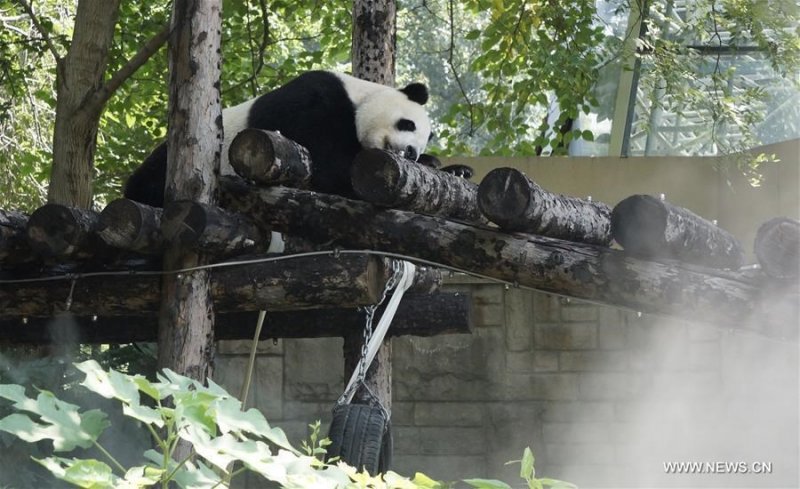
As we humans strap on our facekinis, the pandas at Beijing Zoo are enjoying a special heat beating treat: "a dessert of mung bean soup, a traditional Chinese summer soup believed to be beneficial to human body, and in this case animal body, to reduce heat."
An employee at the Zoo told Shanghai Daily about this, before adding: “Giant pandas cannot handle the heat, so we must keep the indoor temperature between 24 to 26 degrees Celsius. They eat eight meals every day to maintain strength, including bamboo shoots, carrots, and mung bean soup. Each panda consumes almost 50 kilos of bamboo a day.”
Here's one of the pandas from the story:
I've already ordered my own daily 50 kilo bamboo allotment from Taobao (see here, scroll down). Hopefully this will help keep me as cool as a Beijing panda on these muggy July days.
Lol. I don't mind to stay indoors 24/7 and have eight meals a day
As we humans strap on our facekinis, the pandas at Beijing Zoo are enjoying a special heat beating treat: "a dessert of mung bean soup, a traditional Chinese summer soup believed to be beneficial to human body, and in this case animal body, to reduce heat."
An employee at the Zoo told Shanghai Daily about this, before adding: “Giant pandas cannot handle the heat, so we must keep the indoor temperature between 24 to 26 degrees Celsius. They eat eight meals every day to maintain strength, including bamboo shoots, carrots, and mung bean soup. Each panda consumes almost 50 kilos of bamboo a day.”
Here's one of the pandas from the story:
I've already ordered my own daily 50 kilo bamboo allotment from Taobao (see here, scroll down). Hopefully this will help keep me as cool as a Beijing panda on these muggy July days.
Excellent list! Many of my favorites are included here (Meyer is a particularly strong author). Another great "Beijing book" is Red China Bluesby Jan Wong. It's a gripping read and very moving, though government officials would deem it too political and sensitive to ever make it readily available on the Mainland. I'm pretty sure the Bookworm could help you get a copy if you're interested.
China definitely does not have the world's highest prevalence of obesity.
...
But that's totally misleading data,
As the saying goes, China is a land of contrasts. It is a country with the unique problem of trying to solve malnutrition and obesity at the same time (or at one time). But to say that all the skinny people balance out the fat people doesn't give a clear outline of what we're talking about.
I'll totally agree that just because Beijing has more millionaires than NYC doesn't mean I'm rich. And just as there's a poverty gap, so is there a gap between over-nutrition and undernutrition, but the difference is that the latter is skyrocketing in China, climbing so fast it will reach USA #1 levels sooner than later. Are we going to wait until then to finally call China "fat" when we're deep inside the epidemic now? Do we need to wait until we hit 35% of 1.3 billion before the Fat-wa is issued?
Doc, let's all get harmonious and agree: the warning signs are here, prediabetes is a thing, and so is the dangerous spectre of childhood obesity. And to bring it all back to the subject at hand, it's clear that bad eating habits are leading to unhealthy lifestyles for many urban residents... like indulging in all-you-can buffets... ones that haven't gone under, anyways.
With USA-styled serving portions slowly gaining acceptance in China, things aren't getting better as people remain commited to thinking that being overweight is just a problem for unmarried women under 27.

Re: Whup Some Ass While Whipping Yourself Into Shape With the...
Knowing how to fight is a great art if used only for self-defence purpose.
Re: 5 Insta-Ready Detox Waters You Can Make At Home
Thanks, I have taken a print out and going to try it tomorrow.
Re: Football Star Cristiano Ronaldo Spotted Signing Walls and...
Sadly no statue unveilings.
So art.
Re: Football Star Cristiano Ronaldo Spotted Signing Walls and...
Clearly, Africans can't stand to be around Ronaldo.
Re: Football Star Cristiano Ronaldo Spotted Signing Walls and...
And while Ronaldo's dedication to the PE teacher in Beijing was quite classy, he showed a different (i.e. less humble) side of himself in Shanghai. The Shanghaiist says:
On Saturday, he dropped by the Shanghai Stadium for a match between Shanghai SIPG and Guangzhou Evergrande where he explained to fans that actually he was to blame for this week's insanely high temperatures.
Re: Get Your Caffeine Cravings Fixed With Online Coffee...
A friend just sent me a surprise morning coffee from this place--it was excellent! It arrived nice and hot... As far as the quality of the coffee goes, I would highly recommend it!
Re: Beijing Beats: Carl Nunes, Club Paradise, IMAABS, Liao...
The July 22 Club Paradise event at Yue Space has been canceled.
Re: Apple Pay Launches Its Largest, Weirdest Promotion in China
Apple Pay is the easiest payment system to use wherever it is accepted, including China. For all of the bluster surrounding WeChat Wallet, Apple Pay is easier and quicker. No need to open an app, no need to fumble with anything in Chinese, and a decent bank (China Merchants Bank) can activate it for you in under five minutes.
Re: Klerm: Cacha Cacha Returns With a Refreshed Take on Thai
Yes, that is most likely my mistake. Like I said, at this point things were getting a little woozy. Thank you for correction, IT!
Re: Beersmith Gastropub, The CBD’s Biggest, Newest (and Only)...
There are several characterful bars in hutong, such as regain elements, dirty duck, and great friend outdoors club; old ones like el nido, cellar door, peiping are still there.
Re: Winter is Here, Kind Of: Where to Watch the 'Game of...
Guys.. please note that the season 6 marathon happened on Sunday at Caravan, not on Monday.
Re: Make a Splash This Summer: Beijing’s Best Swimming Pools...
How come you don't even mention the large Olympic sandbeach/waterpool area in the Chaoyang park in Beijing?
It's like reviewing Beijing's attractions and "forgetting" the Forbidden City.
And for these indoor pools - there are over a hundred of them in BJ when I checked, in public schools, fitness clubs, living compounds, etc (e.g there are three 50m pools in 10min walk from my office, there are three 25m pools in 10 min walk from my living place). You seemingly arbitrarily pick 5 and call them "best".
Re: Winter is Here, Kind Of: Where to Watch the 'Game of...
Westerosi with Chinese characteristics: Game of Thrones main theme as played by a band, a guqin, and a guzheng.
Re: Beijing Summer History Reads That Won't Leave You Napping
Thanks for the recommendations, going to read both of these books: Red and Modern China..
Re: Beijing Summer History Reads That Won't Leave You Napping
As for an official version of Chinese History for Dummies, Jonathan D. Spence's The Search for Modern China is about as close as you'd get in my opinion. It's well written, extremely informative, and is one of those history books that you can crack open at any page and learn something cool about China.
Re: Beat the Heat: Essentials to Survive Beijing Summer
Lol. I don't mind to stay indoors 24/7 and have eight meals a day
Re: Beat the Heat: Essentials to Survive Beijing Summer
As we humans strap on our facekinis, the pandas at Beijing Zoo are enjoying a special heat beating treat: "a dessert of mung bean soup, a traditional Chinese summer soup believed to be beneficial to human body, and in this case animal body, to reduce heat."
An employee at the Zoo told Shanghai Daily about this, before adding: “Giant pandas cannot handle the heat, so we must keep the indoor temperature between 24 to 26 degrees Celsius. They eat eight meals every day to maintain strength, including bamboo shoots, carrots, and mung bean soup. Each panda consumes almost 50 kilos of bamboo a day.”
Here's one of the pandas from the story:
I've already ordered my own daily 50 kilo bamboo allotment from Taobao (see here, scroll down). Hopefully this will help keep me as cool as a Beijing panda on these muggy July days.
Re: Beijing Summer History Reads That Won't Leave You Napping
Excellent list! Many of my favorites are included here (Meyer is a particularly strong author). Another great "Beijing book" is Red China Blues by Jan Wong. It's a gripping read and very moving, though government officials would deem it too political and sensitive to ever make it readily available on the Mainland. I'm pretty sure the Bookworm could help you get a copy if you're interested.
Re: Make a Splash This Summer Beijing’s Best Swimming Pools...
Um. Title...
"... to Salvage This Summer" or "to Save You from the Heat"
Word usage, guys...
Re: Once a Food Hoarder’s Heaven, Infamous Golden Jaguar...
As the saying goes, China is a land of contrasts. It is a country with the unique problem of trying to solve malnutrition and obesity at the same time (or at one time). But to say that all the skinny people balance out the fat people doesn't give a clear outline of what we're talking about.
I'll totally agree that just because Beijing has more millionaires than NYC doesn't mean I'm rich. And just as there's a poverty gap, so is there a gap between over-nutrition and undernutrition, but the difference is that the latter is skyrocketing in China, climbing so fast it will reach USA #1 levels sooner than later. Are we going to wait until then to finally call China "fat" when we're deep inside the epidemic now? Do we need to wait until we hit 35% of 1.3 billion before the Fat-wa is issued?
Doc, let's all get harmonious and agree: the warning signs are here, prediabetes is a thing, and so is the dangerous spectre of childhood obesity. And to bring it all back to the subject at hand, it's clear that bad eating habits are leading to unhealthy lifestyles for many urban residents... like indulging in all-you-can buffets... ones that haven't gone under, anyways.
With USA-styled serving portions slowly gaining acceptance in China, things aren't getting better as people remain commited to thinking that being overweight is just a problem for unmarried women under 27.