
A Night to Forget – Carmina Burana at the NCPA
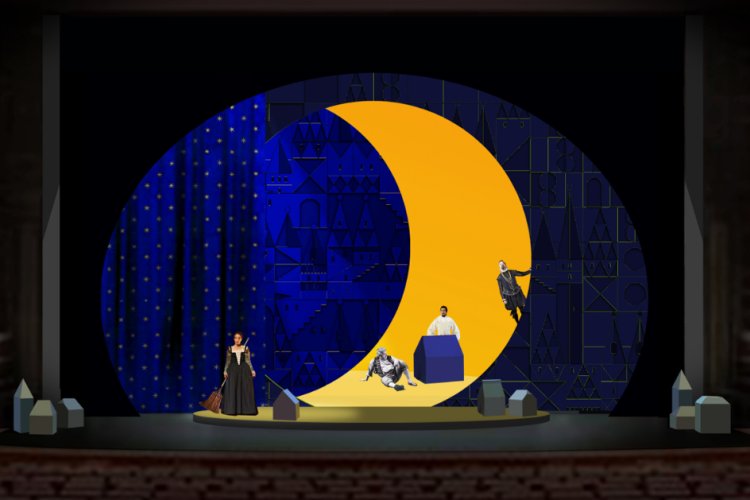
No one will confuse the China National Opera House’s symphonic orchestra and chorus with any of Europe’s finest, but even by local standards the country’s oldest opera troupe had a night to forget at last Thursday’s performance of Carl Orff’s Carmina Burana at the National Center for the Performing Arts.
In front of a third-empty concert hall, the chorus couldn’t project, the symphony orchestra had ensemble problems and one of the three soloists choked – figuratively and literally.
Between the 15th and 16th movements of Orff’s 25-movement scenic cantata, the soprano, who has just completed a solo, is supposed to remain standing while ceding the spotlight to the baritone. Her sidestep is his cue to rise from his seat and take his place.
On Thursday, the baritone somehow missed his cue and had to scramble into position while the orchestra was already playing behind him. Then, disaster: while singing (in Latin), “Day, night and everything / is against me, / the chattering of maidens / makes me weep,” a note got caught in his throat. He uttered a halting hem, then a cough.
It was a momentary lapse, certainly forgivable, but an audible gasp rose from the audience.
Part of the appeal of watching soloists is the understanding that there is always the risk of that horrifying gaffe, made ten times worse by the all-seeing spotlight. But even with the awareness that professionals are, after all, human, you’re nonetheless shocked to see a big-stage flub. Upon retaking his seat, the tenor gave the baritone a quick pat on the arm for reassurance, though it’s doubtful that was of much comfort.
I don’t mean to sound overly harsh. The orchestra has its shortcomings and that mishap was unfortunate, but Orff’s magnum opus was entertaining nonetheless.
The signature movement, without question, is the opening, O Fortuna. If the name means nothing to you, the tune surely does. Give it a listen and see what image it conjures. Personally, I think about the promo for Wrestlemania XIV’s match pitting the Undertaker, with his black full-length trench coat, black Stetson hat and general bad-assitude, against his brother Kane.
If your point of reference is different, that’s understandable. Since first being performed by the Frankfurt Opera in 1937, this two-and-a-half-minute piece has enjoyed remarkable crossover appeal, appearing in everything from video games and movie previews to advertisements and So You Think You Can Dance; it has been spoofed, synthesized and remixed by hip-hop producers, deejays, comedians, classical musicians, et al. It is quite possibly the most recognizable classical piece of the 20th century.
Yet after all that, the best version is still probably the original, which is capable of exposing the hopeless imitators. In Hate Me Now, rapper Nas, with O Fortuna as his beat line, bewails of the mercurialness of fate: “It’s a thin line between paper and hate, friends and snakes, nine millis and thirty-eights, Hell or the pearly gates.” Not to say I don’t appreciate Nas’ obvious skills as a wordsmith, but rhyming seems like a ditty compared to the rage and choler of the speaker in the original:
Fate – monstrous
and empty,
you whirling wheel,
you are malevolent,
well-being is vain
and always fades to nothing,
shadowed
and veiled
you plague me too;
now through the game
I bring my bare back
to your villainy.
The rest of Carmina Burana, based on a collection of medieval poems by the same name, doesn’t have the same pop culture appeal, though that doesn’t make it any less amazing. The poems are about destiny, spring, love, lust, drinking and gambling. They celebrate the body while acknowledging the unseen hand of oracular – one might say divine – forces, alternatively crying out in ecstasy, despair and outrage.
If the lyrics were in anything but Latin, these songs would have never seen the light of day (indeed, they made Nazi officials queasy). In movement No. 20, “Veni, veni, venias” (Come, come, O come), the singer’s final words are, “I shall always glory in you!” Pun intended. And in No. 22, the women in the chorus burst out, “Oh! Oh! Oh! … My virginity makes me frisky, my simplicity holds me back.”
It all builds up to a stirring finish, a reprise of O Fortuna. At the end of Thursday’s performance inside the Egg, the audience’s tepid-though-persistent applause brought conductor Yu Feng out for an encore. His choice of songs was no surprise. I surmise O Fortuna has inspired an untold number of musicians to become conductors – Yu, with his left hand, summoned the crescendos, and with his right lowered the boom. Crescendo, BOOM. Crescendo…
Say what you will about China’s National Opera House, but at least they ended on a good note.
Related stories :


Comments
New comments are displayed first.Comments
 burntbread
Submitted by Guest on Wed, 12/09/2009 - 21:57 Permalink
burntbread
Submitted by Guest on Wed, 12/09/2009 - 21:57 Permalink
Re: A Night to Forget – Carmina Burana at the NCPA
Great article/review. I have heard CB many times but it's nice to know a bit more about it.
Validate your mobile phone number to post comments.